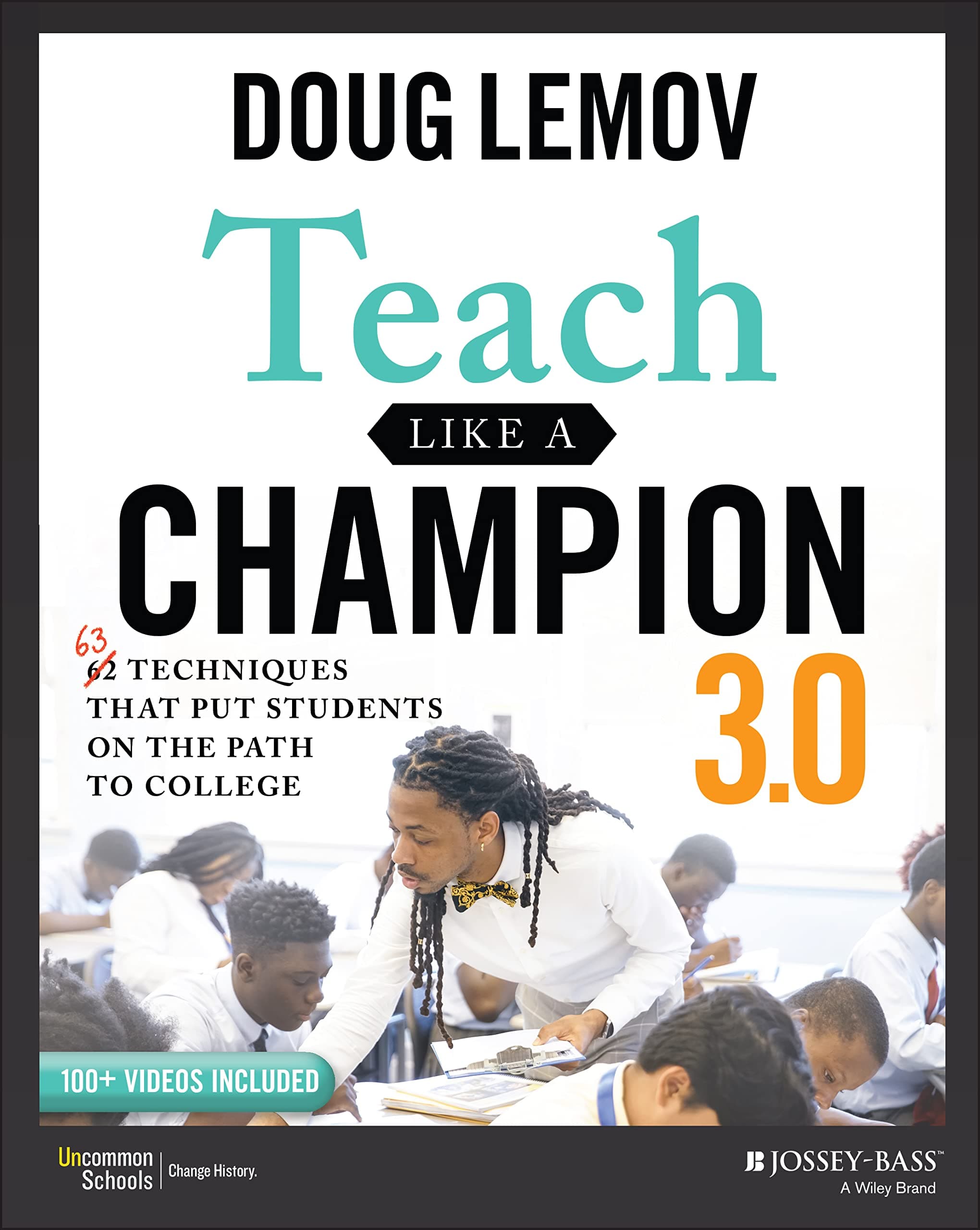
Teach Like a Champion by Doug Lemov
SK
Ms. Sarah Kendi 13 views English
Teach Like a Champion by Doug Lemov is a practical guide for teachers, offering 49 techniques to improve classroom management, engagement, and student learning. It provides valuable insights and tools for educators striving for excellence in teaching.
About this book
Great teaching can be learned. Doug Lemov, admits that he himself was no "champion teacher," but he has studied, through countless hours of observations, what it is that successful teachers do. He focuses on public schools, primarily those serving the inner city. Taking a page from the playbook of Jim Collins who studied what separated the "good" from the "great" companies, Lemov looked for those teaching techniques that separated the merely good teachers from the great ones. This book is a compilation of those techniques and is presented as a toolbox for teachers who want to improve their craft. Lemov purposefully presents "techniques" and not "strategies." He has memories of going to workshops as a teacher and returning with inspirational and yet vague initiatives to "hold high expectations" or "teach kids and not content." Yet it was the more specific suggestions from a peer about what to say and do that helped him to improve his teaching, "When you want them to follow your directions, stand still." It is with the goal of providing teachers with more specific guidance about their teaching craft that Lemov compiled and now presents 49 specific teaching techniques in this book. What Makes Teaching Good is What Works At first glance, the techniques introduced may seem uninspired and banal. They may not be intellectually stimulating or follow the latest educational trends yet they yield impressive results. Consider one technique for collecting and distributing class materials. Lemov often shows a video clip of Doug McCurry, the founder of Amistad Academy in New Haven, Connecticut, taking the time to show students how to pass back papers at the beginning of the school year. He explains the correct way to do this (pass across rows; start on his command; only the person passing gets out of a seat; etc.) Then McCurry times the students with his stopwatch. "Ten seconds, pretty good, let's see if you can do eight." Skeptics may see this as a demeaning task that treats students like robots and brainwashes them. However, if teachers collect and distribute materials twenty times a day, and a typical class takes one minute and twenty seconds to do this compared to McCurry's twenty seconds, by the end of a typical year, MCurry will have saved an additional 63 hours or almost eight days of instruction to teach the causes of the Civil War or coordinate geometry! And yet no school of education in the country would be caught dead teaching teachers how to pass out papers despite the fact that this efficient technique saves a school's scarcest resource (time!) so students have more time to learn.
Details
"Teach Like a Champion" by Doug Lemov is a practical guide for teachers, offering 62 teaching techniques to improve classroom management, student engagement, and academic rigor. The book's core concept is to provide a structured approach to teaching, allowing teachers to build a strong classroom culture and support student success.